Egg whites/cream: typically 20–30 egg whites or ~3–4 L cream per batch
Best for: cakes, frosting, creams, meringue, mashed potatoes, cookie dough, and occasional light bread dough (not for heavy continuous dough work like a spiral mixer).
2. Construction
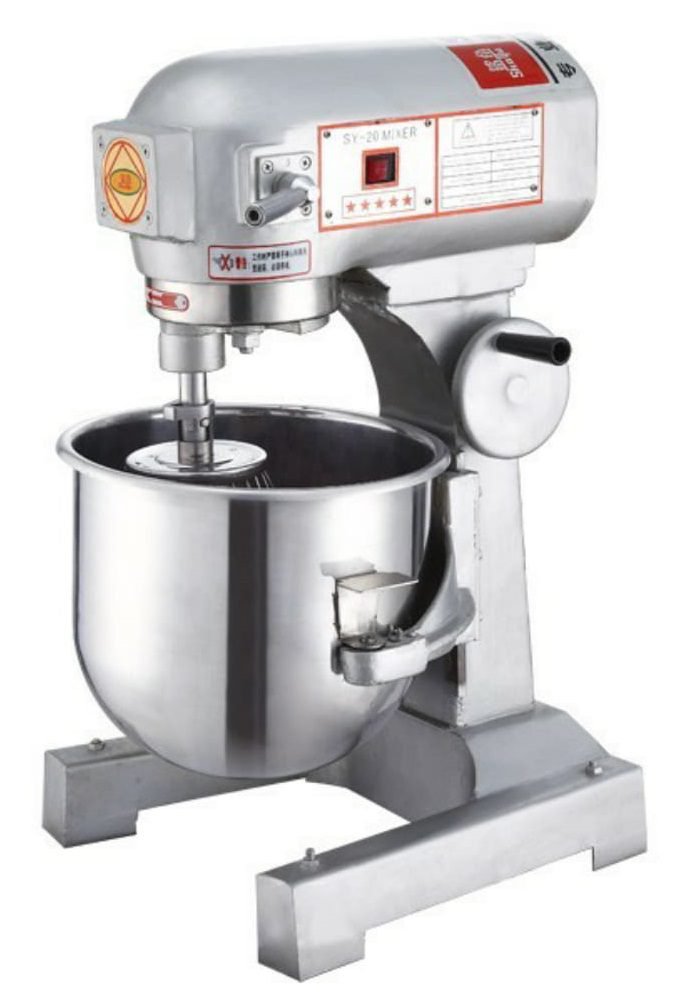
Mixer type: Planetary (tool rotates on its axis and around the bowl)
Bowl: 20 L polished stainless‑steel, removable
Standard attachments:
Wire whisk (for whipping)
Flat beater/paddle (for batters/creams)
Dough hook (for light/medium doughs)
Body/frame: Heavy‑duty cast iron or steel, often epoxy‑coated or stainless front
Mounting: Counter‑top heavy model or small floor‑standing model, depending on design
Safety guard:
Wire guard or plastic shield with safety interlock so the mixer stops if opened.
3. Power & Motor
Power supply (typical):
220–240 V / 50–60 Hz, single‑phase (most markets)
110–120 V / 60 Hz (US/Canada versions)
Motor power: about 0.75–1.1 kW (1–1.5 HP)
Drive system:
Mostly gear‑driven (stronger, more durable)
Speeds:
Commonly 3 fixed speeds (low/medium/high)
Some models offer more steps or electronic variable speed
4. Performance / Duty
Use level: Medium commercial duty – small/medium bakery, café, hotel pastry kitchen, restaurant
Recommended continuous run: typically 10–20 minutes per batch (check manual for duty cycle)
Handles:
Cake/sponge/muffin batters
Buttercream, whipped cream
Cookie dough, choux, etc.
Light/medium bread dough in small batches (for serious bread work, a spiral dough mixer is better).
5. Dimensions & Weight (approximate)
Width: 450–600 mm
Depth: 450–650 mm
Height: 800–1,100 mm
Net weight: about 70–130 kg
(heavier models are generally more robust, with metal gearboxes)
6. Controls & Features
Controls:
On/Off switch
Speed selector lever or knob (1–3 speeds)
Many commercial units include a timer (0–30 min)
Bowl lift:
Hand wheel or lever to raise/lower bowl
Protection & safety:
Overload/thermal protection on motor
Safety cut‑out when guard is opened or bowl is lowered