Cart 0

Working with commercial butchery equipment requires more than simply knowing how to operate a machine. In a busy butchery, meat-processing facility, supermarket or food-service business, staff may work with sharp blades, powerful motors, moving components, electrical equipment, and heavy products throughout the day. Without proper procedures, even routine tasks can present unnecessary risks.
Therefore, safety should be built into every stage of meat preparation and processing. Correct training, suitable equipment, good housekeeping, regular maintenance, and appropriate protective practices can help create a safer and more efficient working environment.
Dero Catering Equipment supplies a range of commercial butchery equipment designed to support professional meat preparation and processing businesses across South Africa. Our range includes meat mincers, meat slicers, meat bandsaws, meat mixers, sausage filler machines, and vacuum sealers, as well as equipment for meat storage, preparation, and display.
Here are some important safety principles to follow when using commercial butchery equipment.
1. Train Staff Before Operating Machinery
One of the most important safety measures is ensuring that employees understand the equipment before they use it.
Commercial machines can be considerably more powerful than domestic appliances. Staff should know what the equipment is designed to do, how it operates, what its potential hazards are, and how to shut it down safely.
Training should cover the manufacturer’s operating instructions, correct loading procedures, emergency controls, cleaning requirements, and basic troubleshooting. Employees should never be encouraged to improvise if a machine behaves unexpectedly.
This is particularly important with equipment such as meat mincers, slicers, and bandsaws, where moving or cutting components can cause serious injuries if used incorrectly.
New employees should be properly supervised until they are confident and competent with the equipment.
2. Use the Correct Machine for the Job
Choosing appropriate butchery equipment is an important part of workplace safety.
Trying to process meat with machinery that is unsuitable for the task can increase the likelihood of accidents, damage equipment, and create unnecessary strain on operators.
For example, a commercial meat mincer is designed to process meat efficiently, while a meat slicer is intended for controlled slicing. A bandsaw is designed for specific cutting applications and must be operated according to its intended use.
Our commercial butchery range includes dedicated equipment for different stages of meat processing, helping businesses select machinery according to their workflow and production requirements.
Before purchasing or using equipment, consider the volume of meat being processed, the type of cuts required, available workspace, and the number of employees who will operate the machinery.
3. Keep Hands Away from Moving and Cutting Parts
Sharp blades and moving components require constant awareness.
Operators should never place their hands near moving blades, cutting mechanisms, or feed openings while equipment is operating. Meat should be introduced using the appropriate method or supplied accessories rather than hands.
Never attempt to push meat further into a machine by reaching into an opening.
If something becomes stuck, switch off the equipment and follow the manufacturer’s procedure for safely clearing the obstruction. Do not assume that stopping the visible movement means the machine is immediately safe to handle.
The same principle applies when cleaning or inspecting equipment. Moving parts should be completely stopped and the equipment isolated from its power source where appropriate before hands are placed near potentially hazardous components.
4. Switch Off and Isolate Equipment Before Cleaning
Cleaning is essential in a professional butchery, but it can also create safety risks if machinery is not properly switched off first.
Never clean around moving blades, shafts, or other mechanical components.
Before cleaning, switch off the machine and follow the manufacturer’s instructions for isolation, dismantling, and sanitation. Where applicable, disconnect the electrical supply before removing components that require closer handling.
Staff should also understand which components are removable and how they should be reassembled.
Correct cleaning is particularly important when processing meat because hygiene and food safety depend on preventing contamination between products, surfaces and equipment.
A clean working environment also makes it easier to spot damaged components, loose fittings, or other potential maintenance problems.
5. Wear Suitable Protective Clothing and Footwear
The working environment in a butchery can involve sharp tools, cold storage areas, wet surfaces, and heavy products.
Employees should wear suitable work clothing and protective equipment appropriate to the tasks they perform. Depending on the operation and applicable workplace requirements, this may include protective footwear, aprons, suitable gloves, and other task-specific protective equipment.
However, protective clothing should never be considered a replacement for safe operating procedures.
Loose clothing, jewellery, or anything that could become caught in moving machinery should be avoided around equipment with moving parts.
Footwear is particularly important in areas where water, grease, or meat products may create slippery surfaces. Appropriate non-slip footwear can help reduce the risk of falls.
6. Keep Floors and Work Areas Clean and Dry
Good housekeeping is one of the simplest ways to reduce accidents.
Meat processing can generate water, fat, packaging materials, and food waste. If these are allowed to accumulate, they can create slip, trip, and contamination hazards.
Spills should be dealt with promptly, walkways should remain clear, and waste should be removed appropriately.
Work surfaces should also be organised so that knives, tools, ingredients, and equipment do not create unnecessary obstacles.
A well-planned workspace makes it easier for employees to move safely and concentrate on the task at hand.
7. Inspect Butchery Equipment Regularly
Commercial equipment works hard, often for long periods each day. Regular inspection can help identify problems before they become safety issues.
Before operating machinery, staff should look for obvious signs of damage, unusual wear, loose components, damaged cables, or other problems.
Blades and cutting components should be checked according to the manufacturer’s requirements. Equipment that is damaged or behaving unusually should not simply be kept in operation because production is busy.
Instead, report the problem and arrange appropriate inspection or repair.
Routine maintenance is also important for maintaining consistent performance. Well-maintained equipment can support efficient production while reducing the likelihood of unexpected breakdowns.
8. Take Extra Care with Meat Mincers
Meat mincers can make processing considerably faster and more consistent, but their powerful moving components require careful handling.
Dero Catering Equipment supplies commercial meat mincers, including the Table Top Meat Mincer No12, which is specified at 220V and 0.55kW.
Operators should follow the machine’s instructions carefully and never place their hands into the feed area while the machine is operating.
Meat should be prepared appropriately before processing, and operators should avoid overloading the equipment. If meat becomes jammed, the machine should be switched off and safely isolated before attempting to resolve the issue.
9. Use Meat Bandsaws with Particular Caution
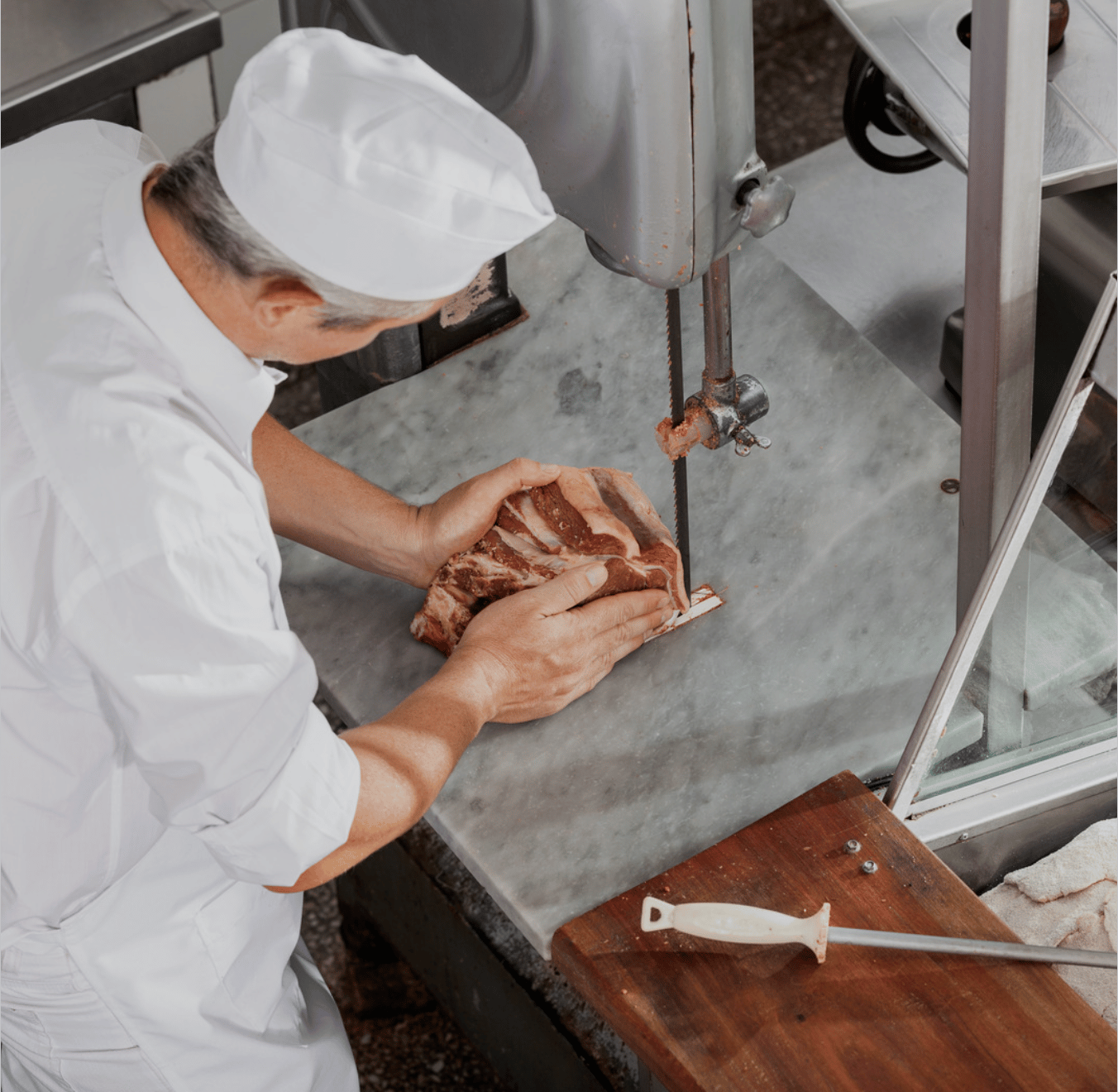
Bandsaws are among the machines that demand the highest level of operator awareness because of their exposed cutting function.
Only trained employees should operate a meat bandsaw, and the manufacturer’s safety instructions should always be followed.
Operators should maintain appropriate hand positioning, avoid distractions, and never attempt to rush through a cut. Guards and safety features should remain correctly positioned.
A bandsaw should never be operated if an important safety component is missing, damaged, or malfunctioning.
Our commercial butchery range includes meat bandsaws as part of its meat-cutting equipment selection.
10. Follow Safe Procedures with Slicers and Other Cutting Machines
Meat slicers provide consistency and speed, but their cutting blades must always be treated as hazardous.
Operators should use the machine according to its intended purpose and never attempt to bypass guards or safety mechanisms.
When adjusting, cleaning, or inspecting a slicer, the machine should be switched off and isolated according to its operating instructions.
The same general principles apply to other cutting equipment: use the correct settings, keep hands away from cutting areas, and never attempt to make adjustments while the machine is moving.
11. Pay Attention to Electrical Safety
Many commercial butchery machines rely on electrical power, making electrical safety another essential consideration.
Electrical cables should be kept away from water, damaged plugs or cables should be reported, and equipment should be connected and operated according to its specifications.
Never use electrical equipment in a way that exposes connections to unnecessary moisture.
If a machine trips a circuit, produces an unusual smell, makes unexpected electrical noises, or behaves abnormally, stop using it and have it inspected by an appropriately qualified person.
Do not attempt makeshift electrical repairs simply to keep production moving.
12. Maintain Cold Storage and Workflows Safely
Safety does not stop at cutting and processing.
A professional butchery also needs to manage meat storage, preparation, and display appropriately. Our butchery range includes meat display refrigeration and equipment supporting different stages of meat handling, while larger package solutions can incorporate cold rooms, display equipment, cutting machinery, mincers, sausage fillers, and sealing equipment.
Workflows should be organised so that raw meat, prepared products, packaging, and waste are managed appropriately.
Keeping preparation areas organised can reduce unnecessary movement and help employees work more safely and efficiently.
13. Never Sacrifice Safety for Speed
Commercial butcheries can be extremely busy, particularly during peak trading periods.
However, rushing is one of the easiest ways for mistakes to occur.
Employees should never bypass a safety procedure because a machine needs to be cleaned quickly, production is behind schedule, or a customer order is urgent.
Good commercial equipment is intended to improve productivity without requiring operators to compromise safe working practices.
A properly planned workflow can help employees maintain both efficiency and safety.
Choose Quality Butchery Equipment for Your Business
The right equipment can make a significant difference to productivity, consistency, and workflow, but safe operation must always remain a priority.
We provide commercial butchery equipment for businesses across South Africa, with solutions covering meat cutting, mincing, mixing, sausage filling, vacuum sealing, refrigeration, preparation, and display. Our range is designed to support professional businesses looking for durable and reliable equipment.
From a Table Top Meat Mincer No12 to larger equipment packages incorporating cold rooms, bandsaws, floor-standing mincers, sausage fillers, and vacuum sealers, we can help businesses select equipment suited to their operation.
Talk to Dero Catering Equipment About Your Butchery Requirements
Whether you are opening a new butchery, expanding production, or replacing older machinery, choosing suitable equipment is an important investment.
Contact Dero Catering Equipment to discuss your requirements and find the right butchery equipment for your business.
We provide nationwide delivery and can assist customers with product information and equipment requirements. Our team is available to help businesses make practical equipment choices for their operations.
Invest in the right equipment, train your team properly, and make safety part of every stage of your butchery workflow.
Frequently Asked Questions About Butchery Equipment Safety
Why is safety important when using butchery equipment?
Commercial butchery equipment can include powerful motors, sharp cutting components, and moving parts. Correct training, safe operating procedures, protective equipment, maintenance, and good housekeeping can help reduce workplace risks.
What butchery equipment does Dero Catering Equipment supply?
Our commercial range includes meat slicers, meat mincers, meat bandsaws, meat mixers, sausage filler machines, vacuum sealers, and meat display fridges, along with equipment supporting meat preparation and processing.
How should meat-processing equipment be cleaned?
Always follow the manufacturer’s cleaning instructions. Equipment should be switched off and safely isolated before cleaning around moving or cutting components. Removable parts should be handled and sanitised according to the applicable operating and hygiene procedures.
What should I do if a machine becomes jammed?
Stop the machine immediately and follow its manufacturer’s shutdown and isolation procedure. Never reach into moving machinery or attempt to clear a blockage while components are still capable of moving.
How often should commercial butchery equipment be maintained?
Equipment should be inspected regularly and maintained according to the manufacturer’s recommendations and the demands of the business. Any unusual noise, damage, wear, or malfunction should be addressed promptly rather than ignored.
Can Dero Catering Equipment supply equipment for a complete butchery?
Yes. We offer individual commercial butchery machines as well as larger package solutions. A large butchery package, for example, includes a cold room, meat display, bandsaw, mincer, sausage filler, vacuum sealer, wrapping equipment, freezer, and preparation equipment.
Does Dero Catering Equipment deliver across South Africa?
Yes. Nationwide delivery is available through courier services, with delivery arrangements based on the size, weight, and destination of the order.