“Dough Mixer 50lt – 220v” has been added to your cart.
View cart
Adding product to the cart!
Added to the cart!
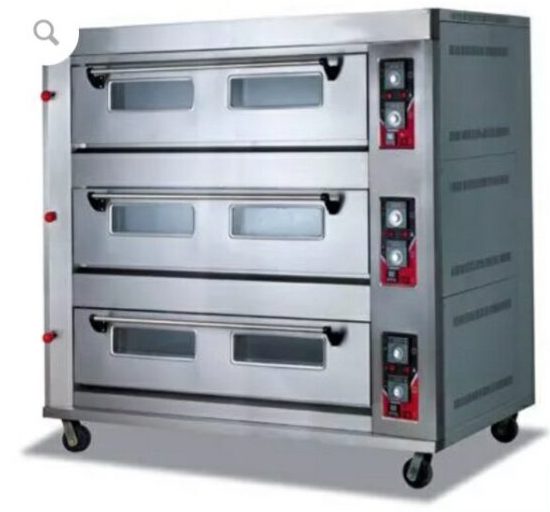
Deck Oven – 3 Deck 9 Tray Gas Oven
R48 999,00
3 Deck 9 Tray Gas Oven
EMPOWERED BY ELECTRIC & GAS
3 LAYER WITH SPACE FOR NINE PANS
DIMENSIONS – (L)1800MM (B)900MM (H)1630MM
WEIGHT – 355KG
PAN SIZE – 600MM X 400MM
BREAD LOAVES CAPACITY – 60 LOAVES AT ONCE/PER CYCLE (FITS 12 X 5PAN BREADPANS
Description
1. Capacity
- Decks: 3
- Total trays: 9 trays (≈3 trays per deck)
- Typical tray size:
- 400 × 600 mm (Euro)
- or 460 × 660 mm / 18″ × 26″ (US sheet), depending on model
- Typical products: bread loaves, buns, pastries, cakes, cookies, pizzas
2. Temperature & Baking
- Temperature range: about 50–350 °C
- Some pizza/bread models: up to 400–450 °C
- Heating:
- Gas burners (under or beside each deck)
- Each deck usually has independent temperature control
- Top/bottom heat balance via separate gas valves or dampers (model‑dependent)
- Control type:
- Gas thermostat (mechanical) or digital controller
- Per‑deck timer (typically 0–60 or 0–120 minutes) with buzzer
3. Gas & Electrical Requirements
Gas
- Fuel:
- LPG (propane/butane) or Natural Gas – jets/nozzles are fuel‑specific
- Heat input (approx.):
- 15–25 kW per deck
- Total 45–75 kW for 3 decks
- Typical LPG consumption:
- Roughly 1.5–3.0 kg LPG/hour per deck at full fire
- Exact figure depends on size, insulation, and set temperature
Electrical (for controls, ignition, lights, fans)
- Supply: 220–240 V / 50–60 Hz, single‑phase
- Load: generally small, around 100–300 W total
- Powers the:
- Ignition system (spark or pilot)
- Control panel / thermostat
- Interior lights
- Any circulation/exhaust fans
4. Construction
- Baking chamber interior: Stainless steel or aluminized steel
- Exterior:
- Stainless steel front; sides stainless or painted steel
- Insulation: High‑density mineral wool/ceramic fiber around chambers
- Doors:
- 3 insulated doors (one per deck)
- Usually with tempered glass viewing windows
- Heavy‑duty, heat‑resistant handles
Baking Surface
- Deck:
- Refractory stone/ceramic deck (common for bread & pizza)
- Some models offer steel deck versions for tray‑only work
5. Dimensions & Weight (approximate)
Varies by manufacturer, but typical for a 3‑deck / 9‑tray gas oven:
- External width: ~1,600–2,000 mm
- External depth: ~900–1,200 mm
- Total height (3 decks + stand): ~1,700–2,100 mm
- Internal chamber height per deck: ~180–250 mm
- Weight: usually 450–800 kg
6. Controls & Safety
-
Per deck:
- Temperature setting (thermostat or digital)
- On/off and ignition control
- Timer with alarm
- Light switch (model‑dependent)
-
Safety features:
- Flame failure device / thermocouple on each burner
- Over‑temperature cut‑out (on better models)
- Proper flue/vent or chimney connection for exhaust
- Gas pressure regulator appropriate to LPG/NG
7. Optional Features (model‑dependent)
- Steam injection (for bread/rolls)
- Digital controllers with programs/recipes
- Independent on/off for each deck (run 1, 2 or 3 decks)
- Stand with tray rack under bottom deck
- Glass doors with stronger lighting for display baking